Thinking about adding an ADU to your Normal Heights property but unsure where to start? You are not alone. Between design choices, permits, and budgets, it is easy to feel stuck. In this guide, you will learn the ground rules in San Diego, ballpark costs by ADU type, timelines, and simple ROI frameworks so you can decide with confidence. Let’s dive in.
ADU rules in Normal Heights
California encourages ADUs and limits local barriers. State law sets the framework for ministerial approvals when projects meet objective standards. If you want a quick primer on the state context, review the California HCD’s clear overview of ADU allowances and timelines in the HCD ADU guidance.
San Diego’s Development Services Department implements these rules locally. The city uses checklists and objective standards to review detached ADUs, attached ADUs, garage conversions, and Junior ADUs. You can explore the city’s program details and handouts on the City of San Diego ADU program.
Normal Heights is a central, older neighborhood with a mix of single‑family and small multi‑family parcels. Many lots are compact, which often makes garage conversions and interior conversions practical first options. Detached and attached ADUs are allowed where zoning and site standards are met, but lot coverage, setbacks, and height limits still apply.
What you can build
The specific ADU types you can pursue depend on your zoning and site. Common options include:
- Interior conversion: Carves a separate unit from existing space in the home. Lowest cost and fastest path in many cases.
- Garage conversion: Converts an existing detached or attached garage into a studio or 1‑bed unit. Often avoids new foundations and exterior walls.
- Attached ADU: Adds a new unit connected to the primary home. Adds living area with a shared or separate wall.
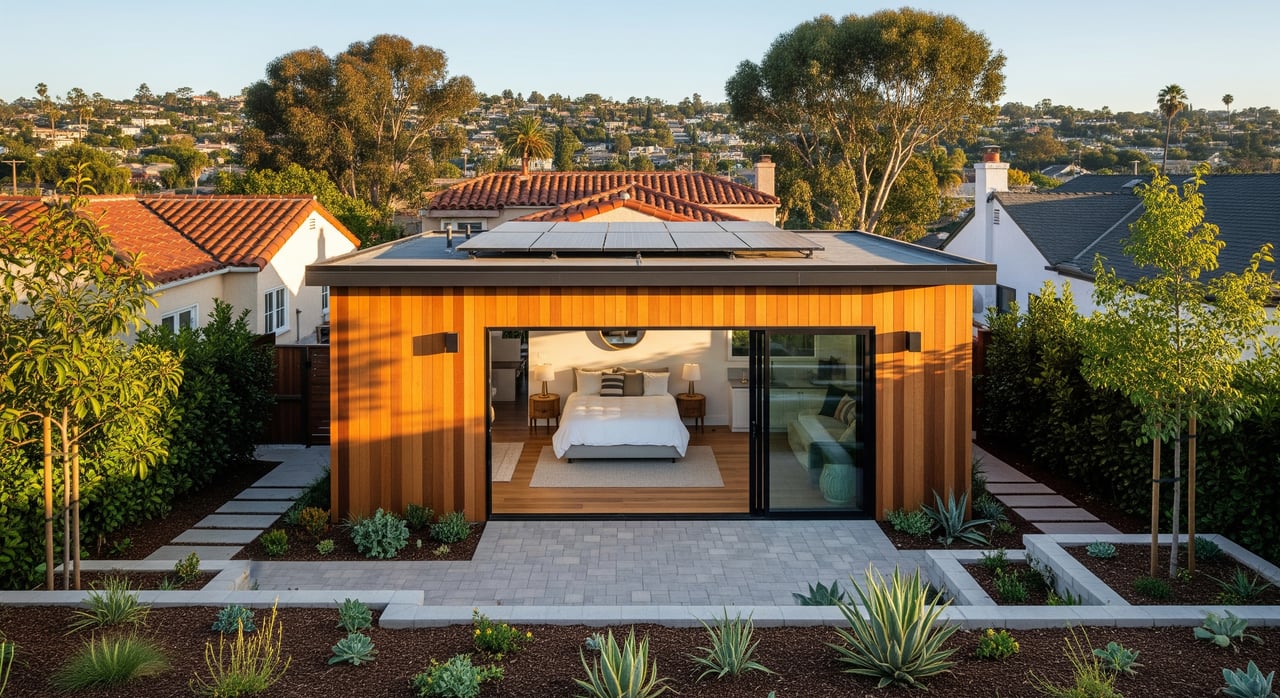
- Detached ADU: New, stand‑alone structure. Offers the most privacy and flexibility, with the highest construction cost.
- Junior ADU (JADU): A small unit within the existing home footprint with specific size and layout limits.
Maximum sizes, setbacks, and height limits are guided by state law and the city’s objective standards. If you plan a conversion that keeps the existing footprint, setbacks often do not apply to those walls. Detached height limits are typically lower than the main house. Parking rules depend on proximity to transit and unit details; the city may require replacement parking when removing an existing garage unless state exemptions apply.
Verify zoning first
Before you sketch floor plans, verify your property’s zoning, overlays, and parcel data. The city’s online tool is the fastest starting point. Use the City zoning and parcel lookup (ZAPP) to check zoning designation, lot coverage, potential overlays, and whether you are near transit, which can affect parking requirements.
If you discover your parcel sits in or near a historic area, or you are in an HOA with CC&Rs, add time for those approvals and restrictions. Historic resources can add review steps. HOA rules are private covenants that can limit or condition ADUs even when city zoning allows them.
Permit steps in San Diego
Here is the typical pathway for a compliant ADU in San Diego:
- Pre‑application check: Confirm zoning, overlays, and basic feasibility. If needed, request a preliminary review.
- Design and plan set: Prepare a site plan, floor plans, elevations, and utility plans that meet objective standards.
- Ministerial submittal: File a complete application with Development Services for zoning and building code review.
- Plan check and conditions: Respond to plan check comments, coordinate utility connections, and receive fee estimates.
- Permit issuance: Pay fees and obtain the building permit.
- Inspections and final: Complete inspections and secure a certificate of occupancy.
Review timelines for complete, compliant ADU applications are designed to be short, but real timelines vary with project complexity. For planning purposes, assume about 60 to 120 days from a complete application to permit issuance on a straightforward project. City staffing levels, historic review, or resubmissions can extend this.
Fees and city costs to expect
Fees include plan check, building permit, and utility connection fees. Some fees scale with ADU size. Connection or capacity fees for water and sewer can be material, especially if you need a new meter or an upgraded lateral. For current fee categories and estimates, start with the city’s Development Services fee schedule and confirm details during pre‑application.
ADU costs and timelines
Local construction markets shift, but these ballpark ranges provide a working budget.
- Interior conversion: About $40,000 to $120,000. Fastest to design and build.
- Garage conversion: About $50,000 to $150,000. Often the best balance of speed and cost.
- Attached ADU (addition): About $120,000 to $300,000. Cost varies with size and finish.
- Detached ADU (new build): About $150,000 to $400,000+. Highest flexibility and cost.
Important qualifiers:
- Local contractor pricing, labor availability, and inflation can swing costs by 30 to 50 percent.
- Small JADUs can be more affordable if they require minimal plumbing and mechanical changes.
- Costs increase with site work, retaining walls, foundation complexity, and long utility runs.
Typical timelines:
- Plan preparation: 2 to 6+ weeks.
- Plan check and permitting: 4 to 12+ weeks for a complete application.
- Construction: 2 to 6+ months, with conversions on the faster end and detached builds on the longer end.
Realistic planning window: 3 to 12 months for simple to moderate projects, longer for complex cases.
Feasibility checklist for Normal Heights
Use this quick filter before you invest in design work:
- Zoning basics: Confirm zoning, lot coverage, and any overlays in ZAPP.
- Existing improvements: Do you have a detached garage, driveway area, or interior space to convert? Many Normal Heights lots are small, which can limit detached footprints.
- Setbacks and easements: Identify rear and side yard setbacks and any recorded easements that could block construction.
- Utilities: Check water meter size and sewer lateral condition. Older services can drive unexpected costs.
- Topography: Rolling or sloped lots can increase foundation, drainage, and retaining wall costs.
- Historic and HOA: If applicable, plan for added review steps or rules.
- Parking: Expect on‑street pressure in this neighborhood. Verify whether you need to replace parking if a garage is converted and whether transit proximity changes requirements.
ROI and house‑hack math
ADU returns depend on your all‑in cost, achievable rent, and financing. Run the math with conservative rents and set aside a vacancy allowance.
Key metrics to track:
- Gross income: Monthly rent times 12.
- Operating expenses: Property tax increment, insurance, utilities you cover, maintenance, and 5 to 10 percent vacancy.
- Net Operating Income (NOI): Gross income minus operating expenses.
- Capital cost: Construction, soft costs, permits, and financing costs.
- Cash‑on‑cash: Annual cash flow before tax divided by your equity invested.
- Cap rate: NOI divided by total project cost.
Example A — Garage conversion
- Assumptions: $80,000 conversion cost. Rent $2,000 per month, or $24,000 per year.
- Expenses at 30 percent: $7,200. NOI: $16,800.
- Cap rate: 16,800 ÷ 80,000 = 21 percent. Cash‑on‑cash depends on your financing structure.
Example B — Detached ADU
- Assumptions: $300,000 construction cost. Rent $2,800 per month, or $33,600 per year.
- Expenses at 35 percent: $11,760. NOI: $21,840.
- Cap rate: 21,840 ÷ 300,000 = 7.3 percent. Payback periods often land between 10 and 20 years depending on rent growth and debt terms.
House‑hack scenario
- If you occupy the primary home and rent the ADU for $2,000 per month, that is $24,000 per year offsetting your mortgage and operating costs. Even at modest returns, the monthly relief can be substantial.
Sensitivity checks
- Use conservative rent comps and include vacancy. Verify with a local rent survey.
- Model current interest rates and construction loan carry.
- Estimate the property tax impact from added improvement value.
- Update your insurance to landlord coverage and price any premium change.
How to price rents
Normal Heights rents vary by micro‑location, size, and finish. Pull current comps for studios and 1‑bed units in Normal Heights and adjacent areas like North Park and the College Area. Then confirm with local property managers who handle small units and ADUs. Rents change with seasonality and supply, so build in a buffer when you underwrite.
Financing, taxes, and insurance
You have several financing approaches. Each has tradeoffs in speed, cost, and risk.
- Cash: Simple and fast, but ties up capital.
- HELOC or home equity loan: Popular for conversions and additions. Uses your home as collateral.
- Cash‑out refinance: Useful if current rates and terms still pencil for your overall payment.
- Construction or ADU‑specific loans: Can match build milestones, but require more documentation and lender oversight.
Taxes and insurance
- Property taxes: Adding an ADU can increase assessed value. For guidance on how reassessment applies, contact the San Diego County Assessor and review your specific scope.
- Insurance: Shift to a landlord or rental dwelling policy for ADU use and verify liability coverage for tenants.
Resale considerations
- In central neighborhoods with solid rental demand, ADUs can expand your buyer pool. The value lift varies. Weigh likely resale gains against your all‑in project cost and operating performance.
Common Normal Heights constraints
- Small lots: Rear yard space can be tight, which makes detached ADUs challenging. Conversions are often the fastest yes.
- Parking: On‑street demand is real. State and city rules can reduce required parking in some transit‑adjacent locations, but confirm whether you must replace covered parking if you remove a garage.
- Utilities: Older laterals and undersized meters can add unexpected costs. Add a contingency and confirm early.
- Historic overlays and HOAs: These can add time or limits. Build that into your schedule.
Your step‑by‑step next moves
- Check zoning: Use the city’s ZAPP property lookup to confirm zoning, overlays, and lot data.
- Site audit: Measure yard depth, locate the garage, note slopes and potential easements.
- Rent comps: Pull recent studio and 1‑bed listings in Normal Heights and nearby areas, then validate with a local property manager.
- City guidance: Review the San Diego ADU program page for checklists and submittal standards.
- Early pricing: Get 2 to 3 preliminary estimates from ADU‑experienced designers and contractors.
- Financing check: Speak with your lender or advisor about HELOCs, refis, or construction loans.
- Insurance and taxes: Talk to your insurer about landlord coverage and estimate your property tax impact.
- HOA or historic: If applicable, confirm permissibility and any added process.
Ready to explore whether an ADU fits your plan, run the rent and cost numbers, and map a smart permit strategy? Connect with a practitioner‑advisor who knows Normal Heights and San Diego’s central neighborhoods. Reach out to Nick Emerson to talk through budgets, timelines, rent comps, and how an ADU can support your bigger portfolio goals.
FAQs
What are the basic ADU types in San Diego?
- Interior conversions, garage conversions, attached ADUs, detached ADUs, and Junior ADUs are typical options, with allowances tied to zoning and objective city standards.
How long do ADU permits take in San Diego?
- For complete, compliant submittals, ministerial reviews can move in weeks, but a realistic planning range from application to permit is 60 to 120 days.
How much does an ADU cost in Normal Heights?
- Ballparks range from about $40,000 to $120,000 for interior conversions, $50,000 to $150,000 for garage conversions, $120,000 to $300,000 for attached units, and $150,000 to $400,000+ for detached builds.
Do I need to add parking for an ADU?
- Parking requirements depend on city rules and state exemptions, including transit proximity; garage conversions can trigger replacement parking unless your parcel qualifies for an exception.
Can I use my ADU for short‑term rentals?
- Short‑term rental use is regulated; review the city’s Short‑Term Residential Occupancy rules and licensing requirements before planning for nightly stays.
Do I have to live on the property to add an ADU?
- State law relaxed owner‑occupancy requirements in many cases, but confirm current city policy and check lender terms if your financing product requires owner occupancy.
How should I underwrite ADU ROI?
- Use conservative rent comps, include a vacancy allowance, estimate the property tax increment, price insurance for rental use, and compute cap rate and cash‑on‑cash returns against total project cost.