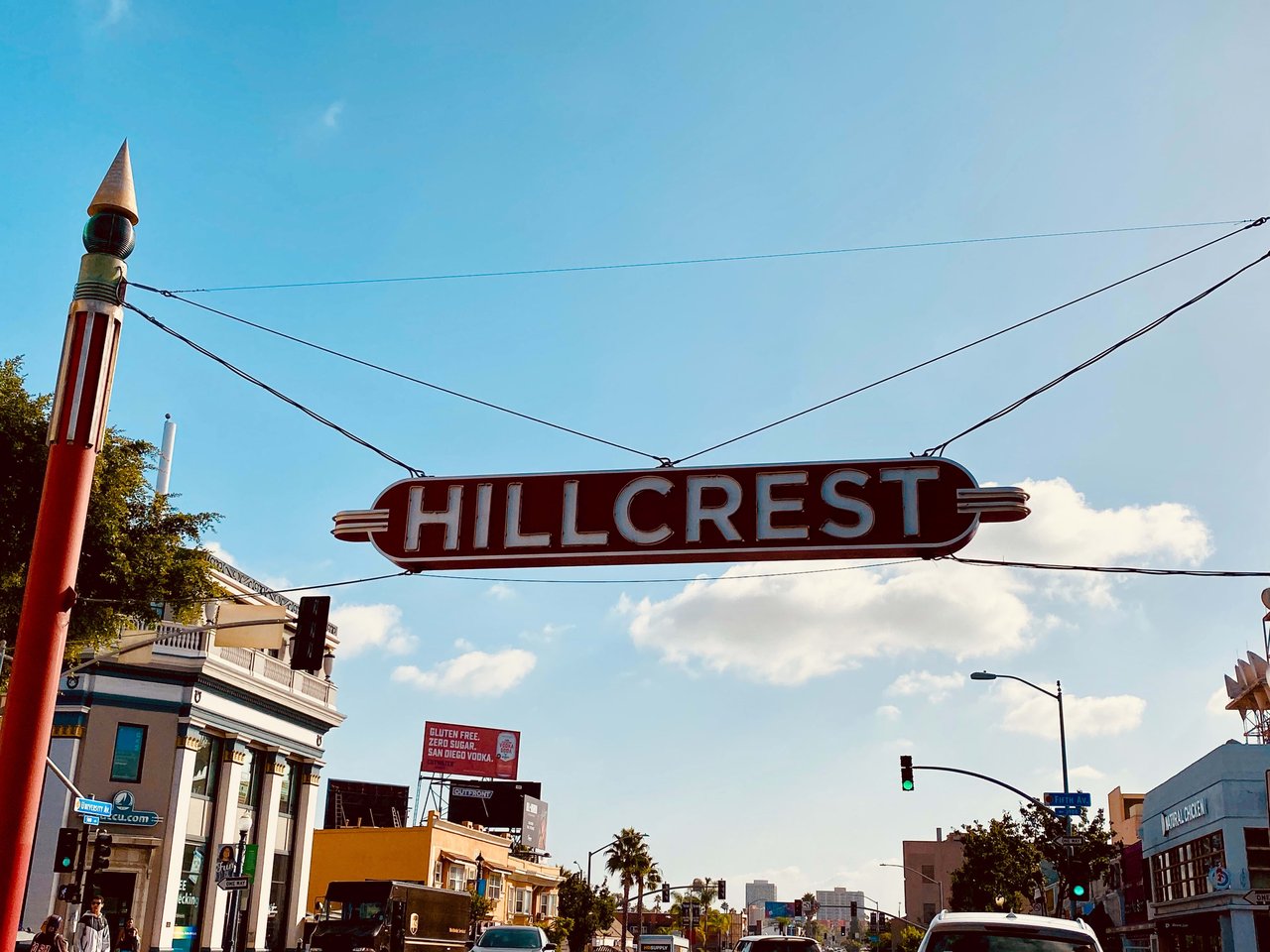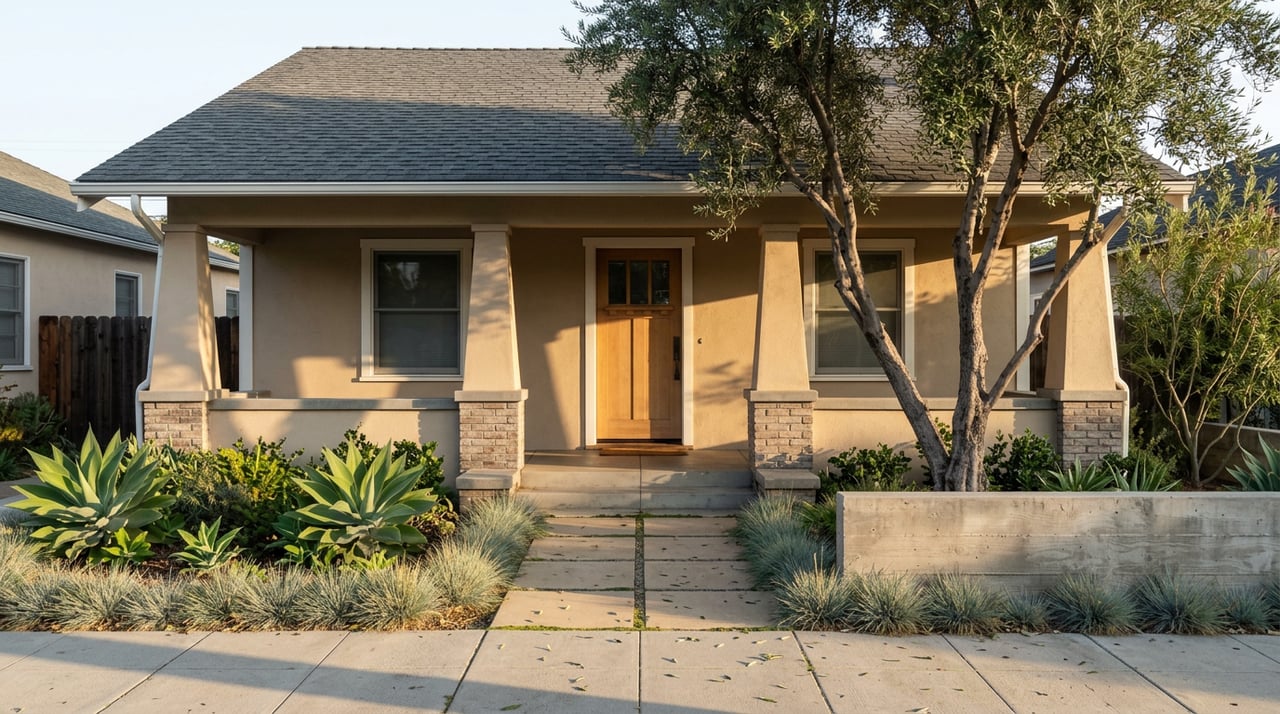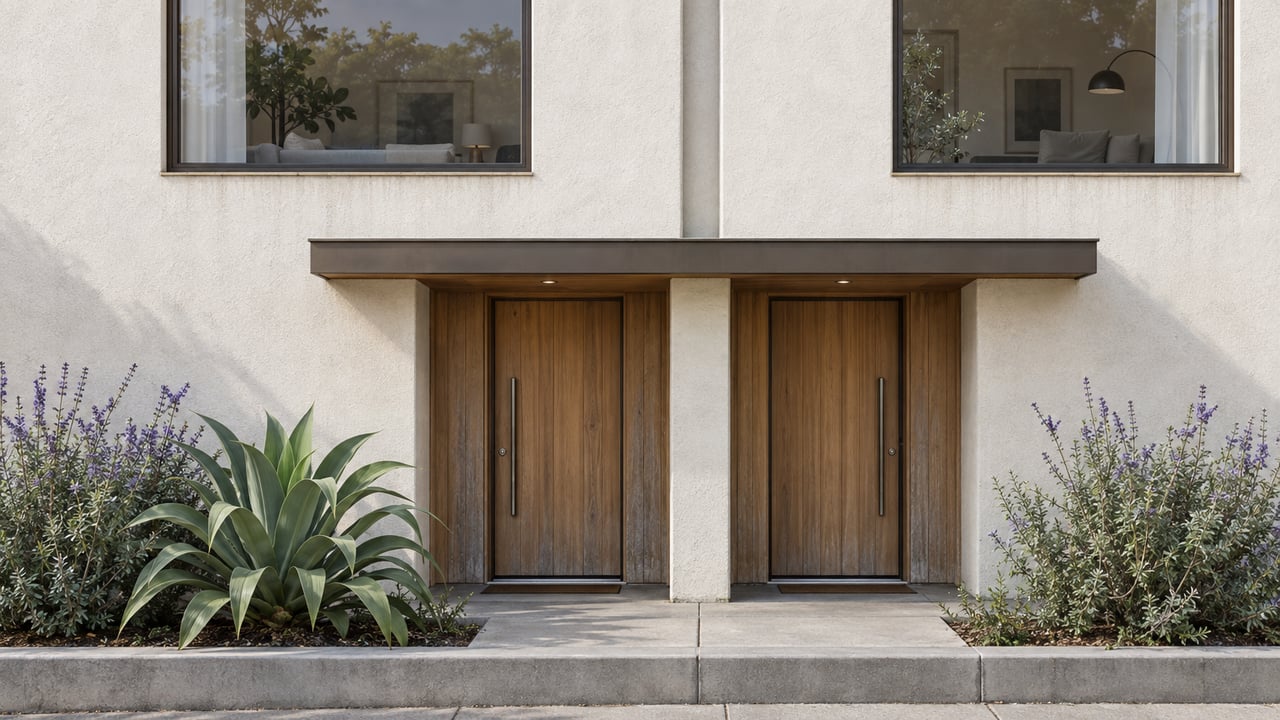
Every investor call about Hillcrest this year eventually gets to the same question: does Senate Bill 79 mean my duplex or fourplex just got more valuable? The law took effect July 1, 2026, and it is genuinely significant. It forces California cities to approve taller, denser housing by right within a half mile of qualifying transit stops. But the mechanism only reaches as far as its trigger, and in San Diego that trigger is a trolley platform or a short list of designated bus stops. Hillcrest's commercial core does not sit next to a trolley station. The bill most people are asking about is not the reason small multifamily lots in this neighborhood have been trading and renovating the way they have.
The actual mechanism has been sitting in the zoning code for years.
The Law Everyone's Citing Measures From a Stop Hillcrest Doesn't Have
SB 79 applies within a half mile, measured as a straight line, of what the state calls Transit-Oriented Development Stops. The city of San Diego's own planning page is specific about what qualifies: San Diego Trolley stations and a small set of bus stops, with the trolley stops carrying the larger entitlements. In April 2026 the city preliminarily identified 54 stops meeting the TOD Stop definition. SANDAG's draft map, released June 18, 2026, added 20 more, bringing the systemwide total to 74. The San Diego City Council also adopted an ordinance on May 21, 2026 that exempts parcels more than a one mile walk from a qualifying stop and phases in low-resource areas on a separate, slower timeline running until the city's next Housing Element update in 2031.
None of that geography runs through the middle of Hillcrest. The neighborhood's own advocacy for its commercial corridor, tracked by the development-watching site BuildSD, notes that a handful of University Avenue and Park Boulevard bus stops have since been added to the state's TOD list, expanding what was once a short roster of 4 qualifying bus stops toward roughly 52 statewide. That expansion could eventually pull a slice of Hillcrest frontage into scope. But the entitlement tied to a bus-stop TOD zone is not the same as the entitlement tied to a trolley station, and the parcel-level analysis has to be done stop by stop. BuildSD's own read on the broader rollout is direct: Hillcrest, along with North Park, had already been upzoned by the city independent of SB 79.
That earlier upzoning is the part worth understanding if you own, or are pricing, a small multifamily lot here.
The Density Bonus That Was Already Live
Much of Hillcrest sits in CC3-9 zoning, which the city put in place through its Complete Communities Housing Solutions program well before SB 79 was signed. The base entitlement under that zoning designation already runs up to 109 dwelling units per acre, and a project that sets aside enough units as deed-restricted affordable housing can add a density bonus on top of that base, with no meaningful height ceiling below 65 feet and discretionary review available above it. This is not a future law. It has been usable in Hillcrest for years, which is a large part of why the neighborhood's small-lot multifamily activity has looked the way it has in 2026 without any help from a transit bill.
The trade is steeper than the density bonus most people picture when they hear the term. California's baseline state density bonus law, the one referenced in most general real estate coverage, typically asks a developer to reserve somewhere between 5 and 20 percent of units as affordable in exchange for a bonus that scales with that share. Complete Communities asks for roughly 40 percent of pre-bonus units to be deed-restricted affordable, in exchange for a much larger jump in what a site can build. That is a materially different underwriting problem, and it is worth checking which framework a specific parcel or a specific comp is actually using before assuming the math transfers.
One more constraint matters for anyone shopping Hillcrest's older housing stock: Complete Communities projects are not permitted on sites inside a designated historical district. A CC3-9 zoning label on a parcel does not automatically mean the density bonus is available if the block sits inside one of Uptown's historic overlays.
What the Zoning Has Actually Built
The clearest evidence that this mechanism has been doing real work is on the ground, not in a bill number.
At 8th and University, a 10,083-square-foot lot zoned CC3-9 would have supported 25 units under base density. Designed by Studio E Architects and tracked by BuildSD as a Complete Communities project, the site is instead delivering 90 residential units with ground-floor retail, set to complete in 2026, by using the affordable set-aside to unlock the larger density allowance. That is roughly three and a half times the base entitlement on the same footprint.
A few blocks over, F&F Properties took a different approach with an existing building. Their $14.1 million renovation of a 12-unit apartment building at 1239 Robinson Avenue, renamed Duplet, expanded it to 29 units: eight three-bedroom apartments, twelve one-bedrooms, and nine studios, according to the San Diego Business Journal's coverage of the project. The company's director of community engagement described their strategy as looking for older buildings that can absorb added density and higher-quality finishes, a pattern they said accounts for about half their current project pipeline concentrated around North Park, Golden Hill, and Hillcrest.
Two very different playbooks, ground-up and renovate-in-place, both landing on the same lever.
Where the Permit Activity Actually Sits
Zoning capacity is not the same as construction volume, and the permit record for Uptown, which includes Hillcrest, Bankers Hill, Mission Hills, and University Heights, shows most owners are not building to the ceiling. Over the trailing 12 months ending in March 2026, the area logged more than 530 housing-relevant permits according to city permit data reported by a neighborhood market guide citing the San Diego Association of Realtors. The breakdown tells you where the real activity is:
| Permit type | Count (trailing 12 months, as of March 2026) |
|---|---|
| Single-family and duplex renovations, no unit change | 130 |
| Multifamily renovations | 116 |
| ADU permits | 92 |
| New apartment buildings, 5+ units | 49 |
Renovation permits with no change in unit count outnumber new apartment buildings by more than two to one. Most owners in Uptown right now are reinvesting in what they already have rather than rebuilding to max density, and the ADU total is nearly double the new-building total. That is a useful check against the assumption that every 2-4 unit lot in Hillcrest is a redevelopment candidate. Some are. Most owners, based on this permit mix, are choosing to improve rather than replace.
What This Means If You Own or Are Pricing a 2-4 Unit Lot Here
The practical takeaway is to check the mechanism before you check the headline. If a Hillcrest parcel is being marketed with SB 79 upside attached to the price, confirm whether it actually sits within a half mile of a qualifying trolley station, since that is where the law's largest entitlements attach, or within one of the newer bus-stop TOD zones, where the allowance is different and still being mapped. If the parcel is already zoned CC3-9, the more relevant question is whether the site sits outside a historic district and whether a 40 percent affordable set-aside pencils against the added density it would unlock. Those are two different deals with two different underwriting paths, and conflating them is an easy way to overpay for upside that was never available on that specific site.
For an out-of-area owner running a portfolio from a distance, this is exactly the kind of local mechanism worth pressure-testing before a 1031 exchange deadline forces a decision. Our Hillcrest rental investing guide covers the operational side of holding property here, and our beginner's guide to San Diego 2-4 unit properties walks through the acquisition math in more detail.
FAQ
Does SB 79 apply to my Hillcrest property? Only if the parcel sits within a half mile of a qualifying TOD stop, which in San Diego means a trolley station or one of the bus stops on the state's expanding TOD list. Hillcrest's commercial core is not adjacent to a trolley platform. Certain University Avenue or Park Boulevard frontages could fall inside a bus-stop TOD zone depending on where SANDAG's map lands, so check the parcel against the city's TOD stop map rather than assuming either way.
What's the real difference between the Complete Communities density bonus and the standard state density bonus? Complete Communities asks for roughly 40 percent of pre-bonus units to be deed-restricted affordable in exchange for a much larger density and height allowance. The baseline state density bonus law used more broadly across California typically asks for something closer to 5 to 20 percent affordable in exchange for a smaller bump. Two similarly zoned parcels can pencil very differently depending on which framework applies.
If you're weighing a Hillcrest acquisition, a refinance, or a 1031 exchange into small multifamily and want the zoning and permit picture run against your specific parcel before you commit capital, Emerson Group can walk through it on a Wealth Call.