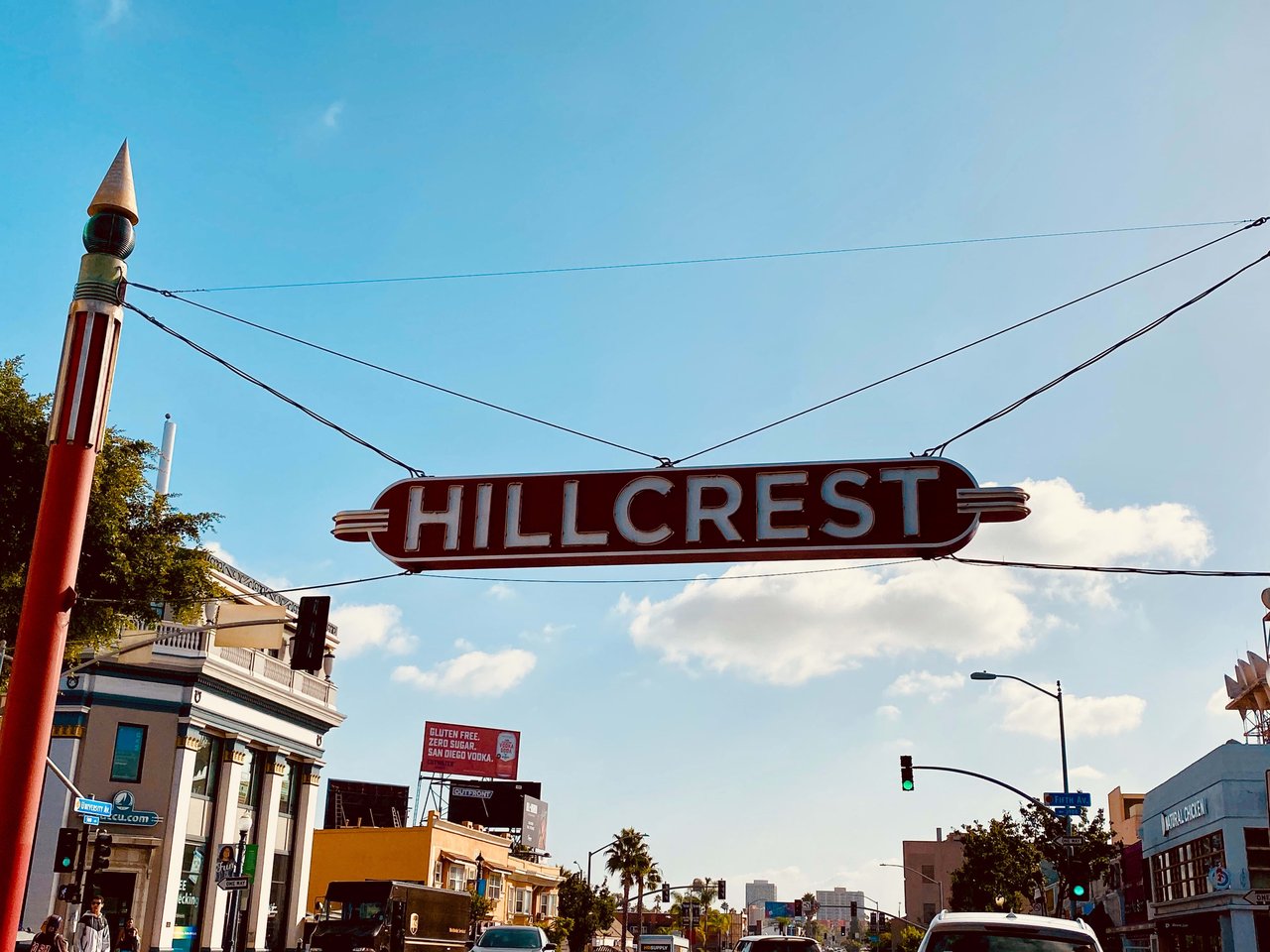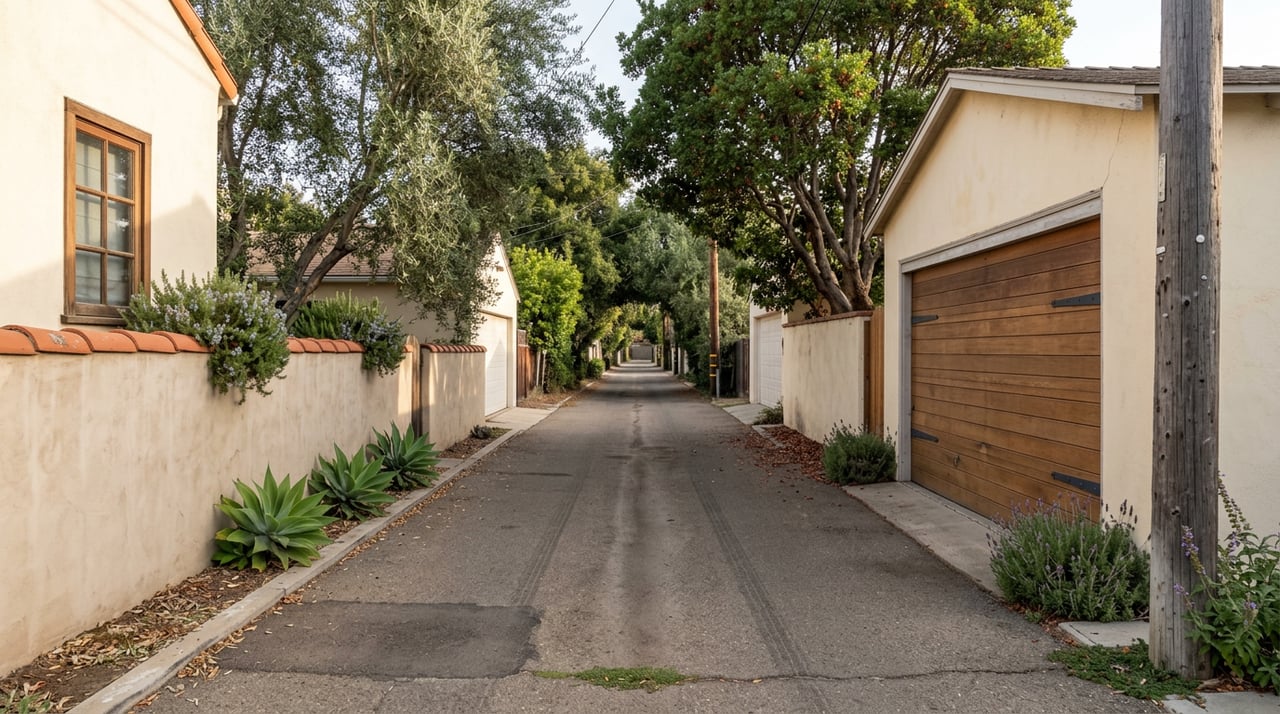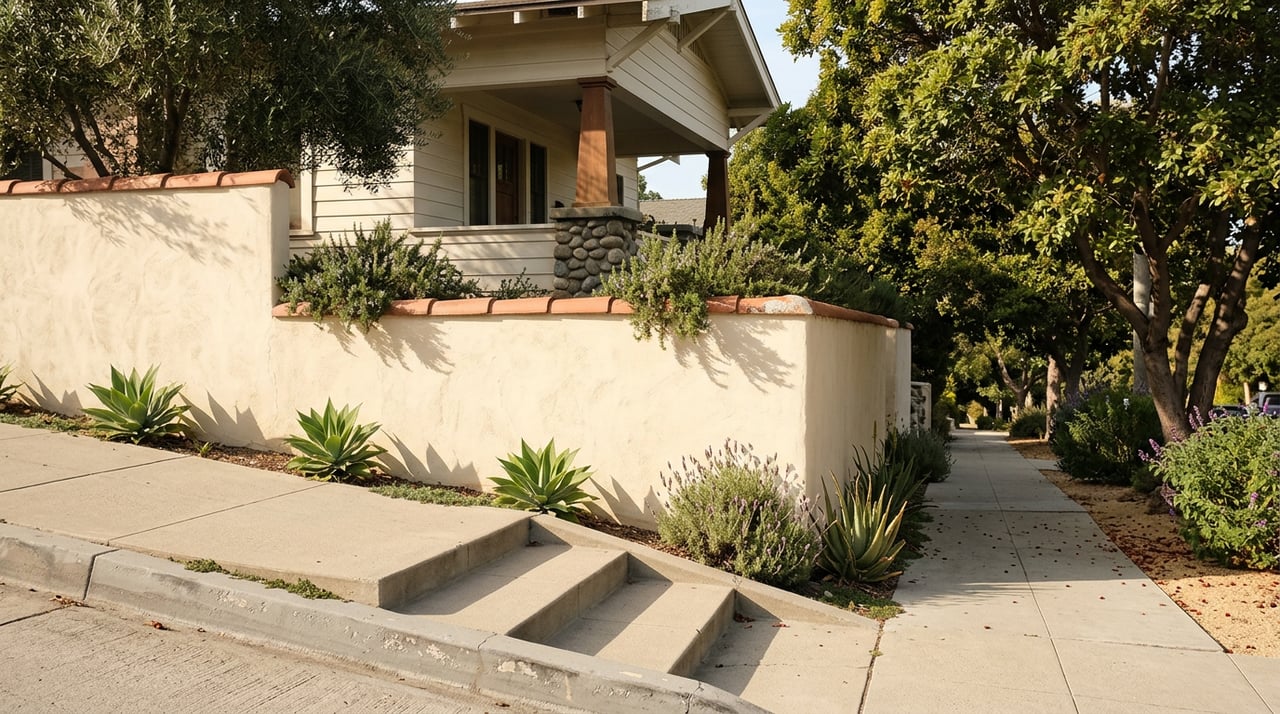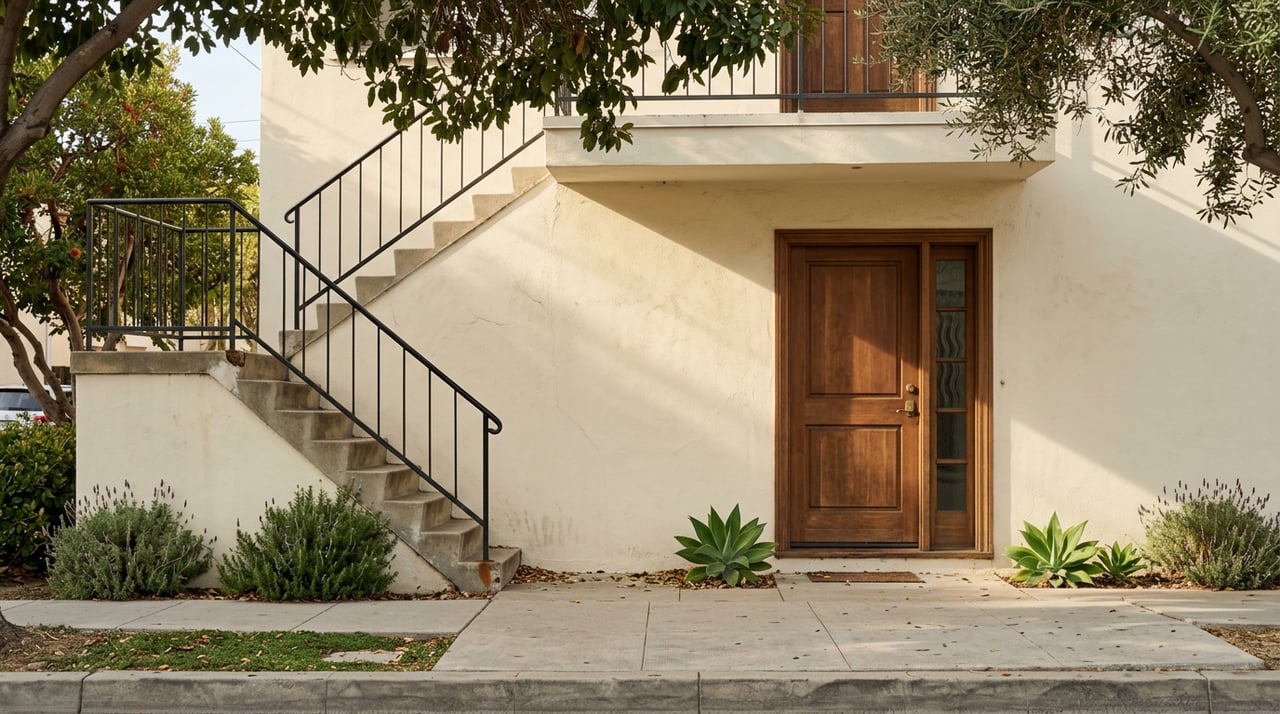
Open three portals for the same Middletown home and you will get three different neighborhoods back. One will call it Mission Hills. One will call it Midtown. One will call it Bankers Hill. The MLS remarks may split the difference and just say 92103. That is not a data problem. It is the mechanism a buyer has to price in before writing an offer.
Middletown sits in the crease where Old Town, Mission Hills, Hillcrest, Bankers Hill, and Little Italy all reach for the same parcels. The freeway cut through it decades ago, the ridgelines fall away toward the bay, and the neighborhood name attached to any given address depends on who is trying to sell it. That ambiguity is why the medians a buyer sees on the portals disagree so violently, and why the same $1.2M budget buys three different lifestyles depending on which side of Reynard Way the listing sits on.
The friction is not price discovery. The friction is agreeing which comps count. Solve that before you fall in love with a floor plan.
The label decides the comp set
The city describes Mission Hills as the area west of Goldfinch and Reynard Way, which technically pushes many "Middletown" hillside blocks into a Mission Hills marketing envelope. Meanwhile, apartment listings on Reynard Way alternately claim Mission Hills, Midtown, Bankers Hill, and Hillcrest inside the same building description. A 5-unit walk-up currently on-market at 3139–47 Reynard Way is described as Bankers Hill in the offering write-up. A neighboring 6-studio property at 3206–16 Reynard Way is marketed as Mission Hills. Both sit on the same street.
For a buyer, that matters in two concrete ways. The appraiser you never meet will pull comps against whichever label your listing agent selected in the MLS neighborhood field, and Mission Hills comps run richer than Middletown comps at the same square footage. And the AVM your lender's underwriter glances at is trained on portal boundaries that do not agree with each other. A property flagged "Middletown" on a boundary-tight neighborhood page may sit inside a Mission Hills MLS envelope on the listing itself. The number a buyer negotiates against is downstream of that single dropdown choice.
What the ridge buys and what the corridor buys
The neighborhood's biggest strength and biggest tradeoff are the same variable. The convenience of sitting two miles from downtown, two miles from the airport, and one exit from I-5 is what the corridor lots pay for in noise, headlight sweep, and thinner outdoor use. The ridge lots pay for it in stairs and hillside grading costs, and they get bay-facing outlooks and quieter blocks in return. Middletown dates back to 1850, and by the late 1800s the western ridges were already stacked with larger Georgian and Mediterranean homes because the view lines were the whole point.
| Sub-pocket | What the same budget tends to get | The friction you underwrite |
|---|---|---|
| Western ridgelines above Pacific Highway | Bay and airport-view outlooks, Craftsman and Spanish Revival stock, larger lots | Steep driveways, retaining walls, parking that varies block by block |
| Interior blocks near Washington and Reynard | Walkable access to India Street and Pioneer Park, 1920s bungalow stock | Cut-through traffic, mixed corridor exposure |
| Corridor lots along I-5 and Pacific Highway | Newer condo stock, shorter days-on-market at list, easier freeway access | Noise, airport approach path, resale story leans on price not view |
| Reynard Way frontage | Small multi-unit walk-ups from the late 1950s, redevelopment upside | Traffic, mixed labeling on the MLS, tighter setbacks |
The Homes.com trailing-twelve-month median of $1,360,000 and average of $1,420,213 pick up a lot of ridge product. Redfin's February 2026 median of $1.0M on twelve closed sales, and March 2026 reading of $1,090,000 down 2.6% year over year, are catching a thinner, more condo-weighted mix. Both are correct. Neither is complete.
Rainford just reset the rent floor on Reynard Way
The most consequential change to Middletown underwriting math in the last twelve months did not come from a price index. It came from a lease-up. Rainford, a nine-story, 102-unit mid-rise built in 2025 by Murfey Company at 3660 Reynard Way, is now leasing studios from roughly $2,690, one-bedrooms from roughly $3,195, and two-bedrooms from roughly $3,549. The building's smallest floor plans start at 468 square feet.
Two things follow. First, any small-condo buyer weighing an owner-occupied purchase against renting on the same street now has a very clean apples-to-apples number to compare against a mortgage payment. Second, and more useful for investors, the 1950s walk-ups that dominate the Reynard Way rent roll are suddenly being priced against a modern in-unit-laundry comparable a block away. The 6-studio building at 3206–16 Reynard Way, sitting on an 8,067 square foot lot with RM-3-7 zoning, is being marketed on that development upside precisely because the ceiling on stabilized rents just moved. That is the kind of local supply event a portal median will not surface for another year.
The 2016 approved but shovel-ready 17-unit condo site listed historically at 3307 Reynard Way, and the "Tri-Canyon village" new-construction condos referenced in the neighborhood's marketing near $1.8M, tell the same story from the sale side. Reynard Way is being densified in pieces, and the pieces are not moving at the same speed as the ridge.
Why three medians can all be right
Reconciling the portal numbers is less about picking a winner and more about reading what each one is actually measuring.
Redfin's February 2026 print reflected twelve closed sales in a small neighborhood polygon, with price per square foot at $687, down 36.5% year over year. A 36.5% drop in price per square foot alongside a 15.7% drop in median almost never means the market fell 36% in a year. It means the mix of what closed shifted toward smaller ridge condos and away from full-lot single-family. Homes.com's twelve-month window smooths that mix and lands closer to the trailing average buyer experience. The San Diego Neighborhood Guide's Q1 2026 average home size of 1,982 square feet is a useful sanity check on what "median Middletown" physically looks like right now.
Zoom out and the county gives context. The Redfin county-level median for the three months ending May 2026 was $954K, down 3.0% year over year, with homes selling in about 23 days. Freddie Mac put the 30-year fixed at 6.36% as of May 14, 2026. Middletown is trading around and above the county median with meaningfully longer marketing time, roughly 70 days on market in Redfin's February read, which is what you would expect from a neighborhood with heavy price dispersion and a fuzzy boundary. Buyers have more time to think. Sellers have less ability to hide a compromised lot behind a hot market.
How to read a Middletown listing before you write an offer
A short checklist that will save a lot of second-round negotiation:
- Pull the MLS neighborhood field, not just the marketing headline. If the listing says Mission Hills but the parcel is east of Reynard Way, ask the listing agent which comp set they used to price it and get the addresses.
- Walk the block at 7:30 a.m. and 5:30 p.m. The corridor exposure that does not show in photos shows up in commute-hour traffic and airport approach noise.
- Verify school assignment at the address, not the neighborhood. Grant K-8 and Point Loma High are the common assignments, but Middletown boundaries cross attendance zones in places.
- If it is a small multi-unit on Reynard Way, price the exit against Rainford's rent card, not a five-year-old rent roll. Any value-add underwriting that assumes 2023 rents is already stale.
- Confirm the ZIP. Middletown is primarily 92103 but spills into 92110 and 92101, and insurance and tax lookups follow the ZIP, not the neighborhood name.
FAQ
Is Middletown the same as Midtown or Mission Hills? No, but the labels overlap. Middletown is a historic 1850s neighborhood on the hillside between Old Town and downtown, bounded roughly by Pacific Highway, Washington Street, and Goldfinch Street. Portions of it are marketed as Mission Hills, Midtown, or Bankers Hill depending on the listing. Verify the parcel, not the headline.
Why did Redfin's price per square foot drop so much year over year? Small-sample mix shift. Twelve closed sales in a month, weighted toward smaller condo product, will move price per square foot far more than the underlying market. Look at trailing-twelve-month averages and price against the specific sub-pocket, not the neighborhood-wide print.
Does the new construction on Reynard Way change my exit if I buy a single-family home on the ridge? Indirectly. The lease-up at Rainford resets the local rental comp set, which affects how a future buyer underwrites your home as a potential rental or short-term rental exit. It also concentrates more foot traffic and headlight sweep on the Reynard corridor itself, which is a net negative for corridor-facing lots and roughly neutral for interior ridge blocks.
Middletown rewards buyers who read the parcel before the label. If you are weighing a Middletown purchase against Mission Hills, Bankers Hill, or Little Italy this year, Emerson Group can pull the actual comp set behind a listing, model the rent-vs-own math against the current Reynard Way lease card, and structure a 1031 exchange or portfolio move around the sub-pocket that fits your hold. Book a Wealth Call when you want the numbers before the tour.